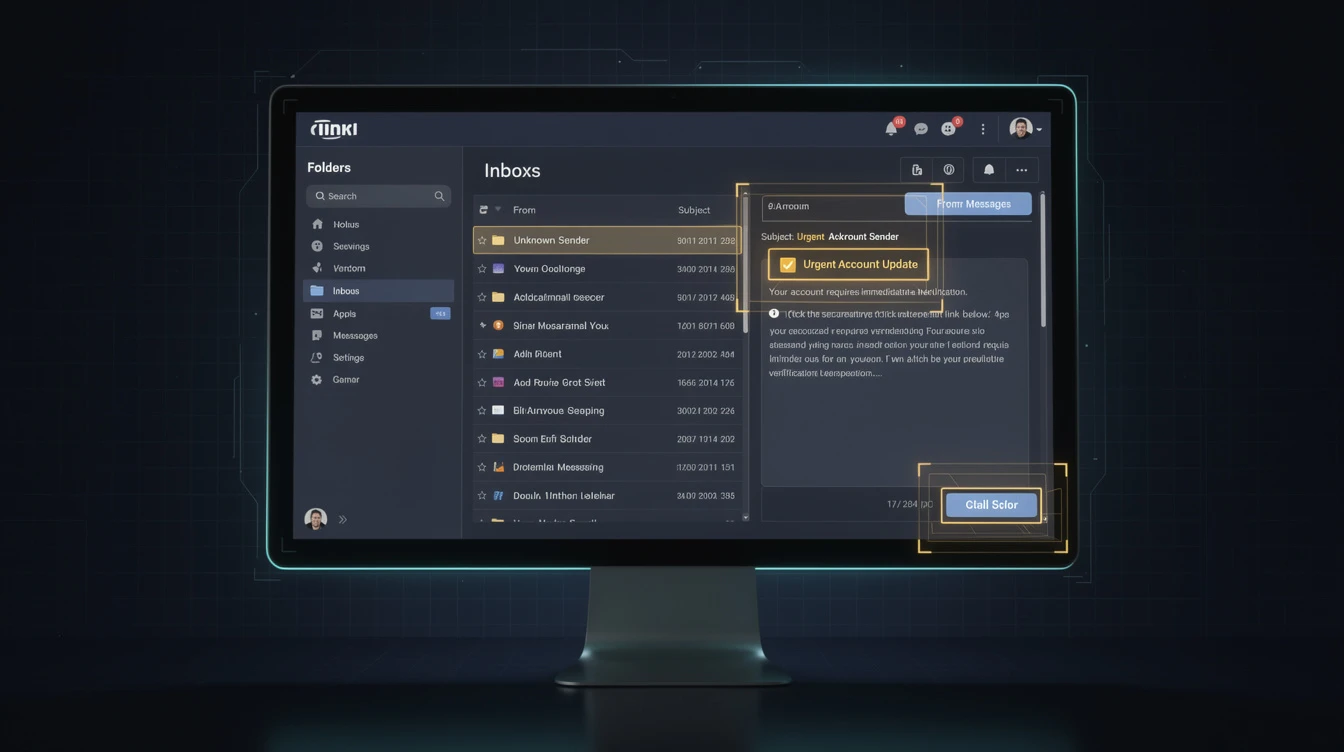
Across Ireland, from Donegal to Cork, businesses, particularly small and medium-sized enterprises (SMEs), are facing an evolving and increasingly sophisticated cyber threat: AI-powered phishing. The easily spotted, poorly written email of old is gone; cybercriminals now use artificial intelligence to craft highly convincing, hyper-personalised attacks that are harder than ever to detect.
The problem: AI supercharging phishing attacks
Phishing is about tricking individuals into revealing sensitive information or taking actions that benefit an attacker. Traditionally, these attacks relied on generic templates and grammatical errors, making them relatively easy to identify. However, the advent of advanced AI, particularly generative AI (like large language models), has changed this considerably. Cybercriminals are now using AI to:
Free Tool: Not sure which regulations apply to your business? Use our Compliance Requirements Checker to find out in under 3 minutes, no jargon, just clear answers.
They craft hyper-personalised emails, analysing vast amounts of publicly available information about a target, from LinkedIn profiles to company websites, to generate emails that are perfectly tailored to the recipient. This means emails that sound exactly like a trusted colleague, supplier, or even a government agency, using specific project names, internal jargon, and personal details. These AI-generated messages bypass traditional email filters that look for common phishing indicators, making them incredibly effective.
They automate spear-phishing at scale. What once required painstaking manual research for each target can now be automated: AI identifies potential victims within an organisation, gathers relevant personal and professional data, and generates thousands of unique, convincing spear-phishing emails in minutes, letting attackers launch highly targeted campaigns against large numbers of employees simultaneously.
Perhaps most alarming, they enable deepfake audio and video BEC attacks. Business Email Compromise (BEC) attacks, where criminals impersonate senior executives to trick employees into making fraudulent financial transfers, are now being augmented with AI-generated voice and video: a call or video message that perfectly mimics your CEO's voice and appearance, instructing an urgent, confidential payment. These deepfake BEC attacks are incredibly difficult to verify and can lead to significant financial losses for Irish SMEs.
The consequence: why traditional defences are failing
For many Irish SMEs, traditional cyber defences, such as basic email filters and annual security awareness training, are no longer sufficient against these AI-enhanced threats. The consequences of a successful AI-powered phishing attack can be devastating:
Financial loss is the most direct consequence: fraudulent transfers, ransomware payments, or the theft of sensitive financial data can cripple a small business, and the average cost of a data breach in Ireland continues to rise while SMEs are often less equipped to absorb such losses. Reputational damage follows close behind: a breach of customer data or a public-facing scam can severely damage trust and cost you customers and future business, and rebuilding a reputation takes significant time and resources. Operational disruption is common too: if systems are compromised or data is encrypted by ransomware delivered via phishing, business operations can grind to a halt, leading to lost productivity, missed deadlines, and contractual penalties. And regulatory fines follow when personal data is stolen: a phishing-driven breach can result in significant fines under GDPR if appropriate security measures were not in place. Irish businesses have a legal and ethical responsibility to protect the data they hold, and failing to do so can have severe legal repercussions.
The solution: building a multi-layered defence against AI threats
Protecting your Irish SME from AI-powered phishing requires a proactive, multi-layered approach that goes beyond basic security measures. Here are key strategies:
1. Strong email authentication (DMARC)
DMARC (Domain-based Message Authentication, Reporting, and Conformance) is an email authentication protocol that helps protect your domain from being used for email spoofing, a common tactic in phishing. By implementing DMARC, you can instruct recipient email servers to reject or quarantine emails that falsely claim to be from your domain but fail authentication checks. This significantly reduces the chances of attackers impersonating your business in phishing campaigns.
2. Enhanced security awareness training
While traditional training may fall short, updated security awareness training matters. It must specifically address AI-powered threats, teaching employees to:
- Spot the subtle signs: Even hyper-personalised emails can have tiny inconsistencies. Train staff to look for unusual requests, slight deviations in tone, or unexpected urgency.
- Verify, don't trust: Emphasise the importance of verifying unusual requests, especially those involving financial transfers or sensitive data, through an independent channel (e.g., calling the sender on a known, pre-existing number, not one provided in the suspicious email).
- Recognise deepfake indicators: Educate staff on the potential for deepfake audio/video and the need for caution with unexpected voice or video calls, particularly those demanding immediate action.
3. Multi-factor authentication (MFA)
MFA adds an extra layer of security by requiring two or more verification factors to gain access to an account. Even if an attacker manages to steal login credentials through a phishing attack, they won't be able to access the account without the second factor (e.g., a code from a mobile app, a fingerprint). MFA is one of the most effective controls against account takeover and should be implemented across all business-critical systems.
4. Call-back verification procedures for financial transfers
For any financial transfer requests, especially those that are urgent or unusual, implement a strict call-back verification procedure. This means independently calling the requesting party on a pre-verified phone number (not one from the email) to confirm the legitimacy of the request. This simple human verification step can prevent significant financial losses from BEC and deepfake scams.
Free Resource: Download The Irish SME Cyber Survival Guide, 10 controls based on NCSC Ireland & ENISA guidance. Plain English, no jargon.
What to do now: your action checklist
Protecting your business from AI-powered phishing is not a one-time task; it's an ongoing commitment. Here's what Irish SME owners should do now:
- Review your email security: Ensure DMARC is properly implemented for your domain.
- Update security awareness training: Focus on AI-specific threats and verification protocols.
- Implement MFA: Roll out multi-factor authentication across all critical business accounts.
- Establish clear financial transfer protocols: Mandate call-back verification for all significant or unusual payments. If you lack in-house expertise, a virtual Chief Information Security Officer (vCISO) can help you implement and manage these defences.
Ready to strengthen your security?
If AI-powered phishing is a concern for your business, a structured review will give you a clear picture and a prioritised action plan.
Book a free 20-minute strategy call with our vCISO team. We work with small and medium businesses across Ireland, no jargon, no hard sell, just honest advice tailored to your business.
Related reading
- Multi-Factor Authentication (MFA): The Single Most Effective Security Control for Irish SMEs
- What is a vCISO and Does Your Irish SME Need One?
- NIS2 Compliance Checklist for Irish SMEs
Related reading
- AI-Powered Phishing: Why Your Employees Can No Longer Spot the Fakes
- Building a Human Firewall: Security Awareness Training That Actually Works
- BEC Fraud: The Threat Targeting Donegal Firms Every Week
[^1]: NCSC Ireland: https://www.ncsc.gov.ie/advice-for-organisations/ [^2]: An Garda Síochána: https://www.garda.ie/en/crime/cyber-crime/ [^3]: DPC: https://www.dataprotection.ie
Pragmatic Security, Cybersecurity advisory for Irish businesses. Based in Donegal, Ireland. CISA, CISSP, CISM certified advisors.