When a Sligo accountancy firm was compromised through a reused password last year, the attacker had access to client files for three days before anyone noticed. No MFA was enabled on their email. In 2023, Google's research revealed a stark reality: 52% of users reuse the same password across multiple accounts. For Donegal and Irish SMEs, this widespread practice, coupled with the increasing sophistication of cyber threats, means that a single compromised password can open the door to your entire digital infrastructure. The question is no longer if you need MFA everywhere, but how quickly you can implement it to protect your business from devastating cyberattacks.
The changing threat picture for Irish SMEs
Cybercriminals are not discriminating. Irish SMEs, often perceived as having fewer resources for strong cybersecurity, are increasingly becoming prime targets. Phishing attacks, ransomware, and data breaches can cripple operations, damage reputations, and incur significant financial losses. The National Cyber Security Centre (NCSC) Ireland consistently highlights the growing threat, urging businesses to adopt fundamental security measures like multi-factor authentication.[^1] Without MFA, a stolen password is a golden ticket for attackers, allowing them to bypass your first line of defense with ease.
Understanding multi-factor authentication (MFA) options
MFA adds an important layer of security by requiring two or more verification factors before granting access. These factors typically fall into three categories.
Something You Know: Passwords and PINs. This is the traditional first layer of defense. While essential, passwords alone are insufficient. They are vulnerable to brute-force attacks, phishing, and credential stuffing, especially when reused or weak.
Something You Have: Authenticator Apps and Hardware Keys. This category provides a significantly stronger layer of security. Apps like Google Authenticator, Microsoft Authenticator, or Authy generate time-sensitive One-Time Passwords (OTPs). These are generally more secure than SMS-based codes as they are not susceptible to SIM-swapping attacks. Hardware Security Keys (FIDO2/WebAuthn), such as YubiKeys, offer the highest level of protection, using public-key cryptography to verify identity and remaining highly resistant to phishing and man-in-the-middle attacks.
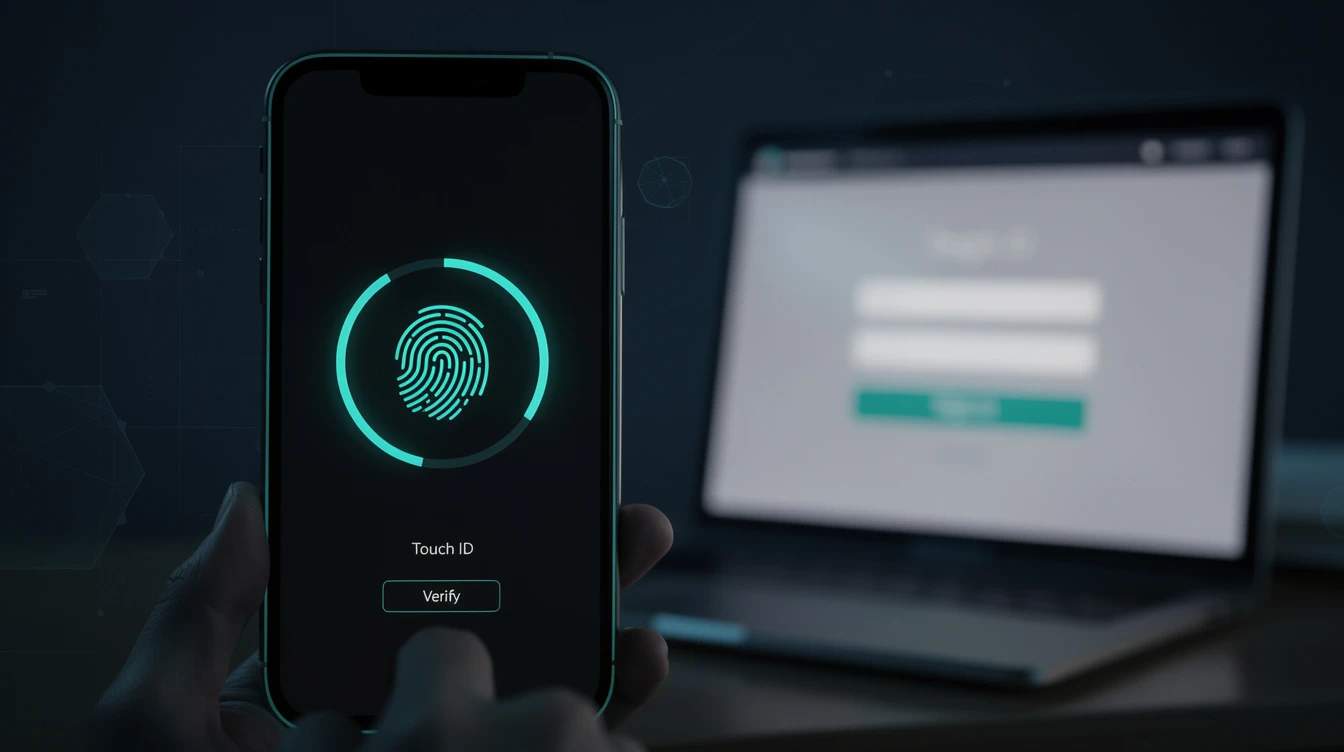
Something You Are: Biometrics. Fingerprint scans and facial recognition, common on modern smartphones and laptops, provide a convenient and secure method. Biometric data must be securely stored and processed to prevent compromise, and biometrics are typically combined with another factor, such as a PIN, for enhanced security.
Implementation priorities for Irish SMEs
Implementing MFA doesn't have to be an overwhelming task. Prioritise its deployment across your most critical systems and accounts:
- Email Systems: Your primary email is often the gateway to many other accounts. Secure it with the strongest MFA available.
- Cloud Services: SaaS applications, cloud storage, and productivity suites (e.g., Microsoft 365, Google Workspace) hold sensitive business data. Ensure all user accounts are protected with MFA.
- Remote Access: For any remote desktop, VPN, or network access, MFA is paramount to prevent unauthorised entry.
- Financial Systems: Banking portals, accounting software, and payment platforms must have MFA enabled to safeguard your finances.
- Critical Business Applications: Any application holding sensitive customer data, intellectual property, or operational controls should be prioritised.
When choosing MFA methods, aim for phishing-resistant options like hardware keys or authenticator apps with number matching where possible. While SMS-based MFA is better than no MFA, it is considered the weakest form due to vulnerabilities like SIM-swapping and phishing.
Free Resource: Download The Irish SME Cyber Survival Guide, 10 controls based on NCSC Ireland & ENISA guidance. Plain English, no jargon.
Common pitfalls and how to avoid them
Even with the best intentions, MFA implementation can encounter challenges. Being aware of these common pitfalls can help Irish SMEs navigate the process more smoothly.
MFA fatigue is a real risk: bombarding users with constant push notifications can lead to them blindly approving requests, even malicious ones. Implement number matching to mitigate this. Lack of user education is another pitfall, employees need to understand why MFA is important and how to use it correctly. Comprehensive security awareness training is important to prevent social engineering attacks targeting MFA.
Inconsistent enforcement also undermines security: if MFA is optional or only applied to some accounts, it creates weak points. Ensure consistent enforcement across all critical systems and users. Overly complex or cumbersome MFA processes lead to user frustration and attempts to bypass security, choose user-friendly options and provide clear instructions and support.
What this means for your business
For Irish SMEs, adopting multi-factor authentication is no longer a luxury; it's a fundamental requirement for cyber resilience. The NCSC Ireland's guidance is clear: MFA significantly reduces the risk of account compromise. Demonstrating strong security measures, including MFA, can be important for meeting data protection obligations under GDPR, enforced by the Data Protection Commission Ireland, and for compliance with NIS2, which is expanding the scope of cybersecurity requirements for Irish entities.[^3]
Any confirmed account takeover or breach incident should be reported to An Garda Síochána's National Cyber Crime Bureau as well as to your insurer and relevant regulatory bodies.[^2] Protecting your business, your data, and your customers' trust starts with securing access points, and MFA is the most effective way to achieve this.
How compliant is your business? Check your compliance readiness with our free Compliance Checker.
Related reading
- MFA Bypass Phishing: What Irish SMEs Must Do Now to Protect Their Microsoft 365 Accounts
- Why Insurers Now Require MFA and EDR, and What Happens If You Don't Have Them
- How to Set Up Multi-Factor Authentication on Microsoft 365 in 20 Minutes
Book a free 20-minute strategy call today, no jargon, no hard sell, just practical advice from an experienced Irish cybersecurity professional.
[^1]: NCSC Ireland, Advice for Organisations: https://www.ncsc.gov.ie/advice-for-organisations/ [^2]: An Garda Síochána, Cyber Crime: https://www.garda.ie/en/crime/cyber-crime/ [^3]: Data Protection Commission Ireland: https://www.dataprotection.ie
Pragmatic Security, Cybersecurity advisory for Irish businesses. Based in Donegal, Ireland. CISA, CISSP, CISM certified advisors.