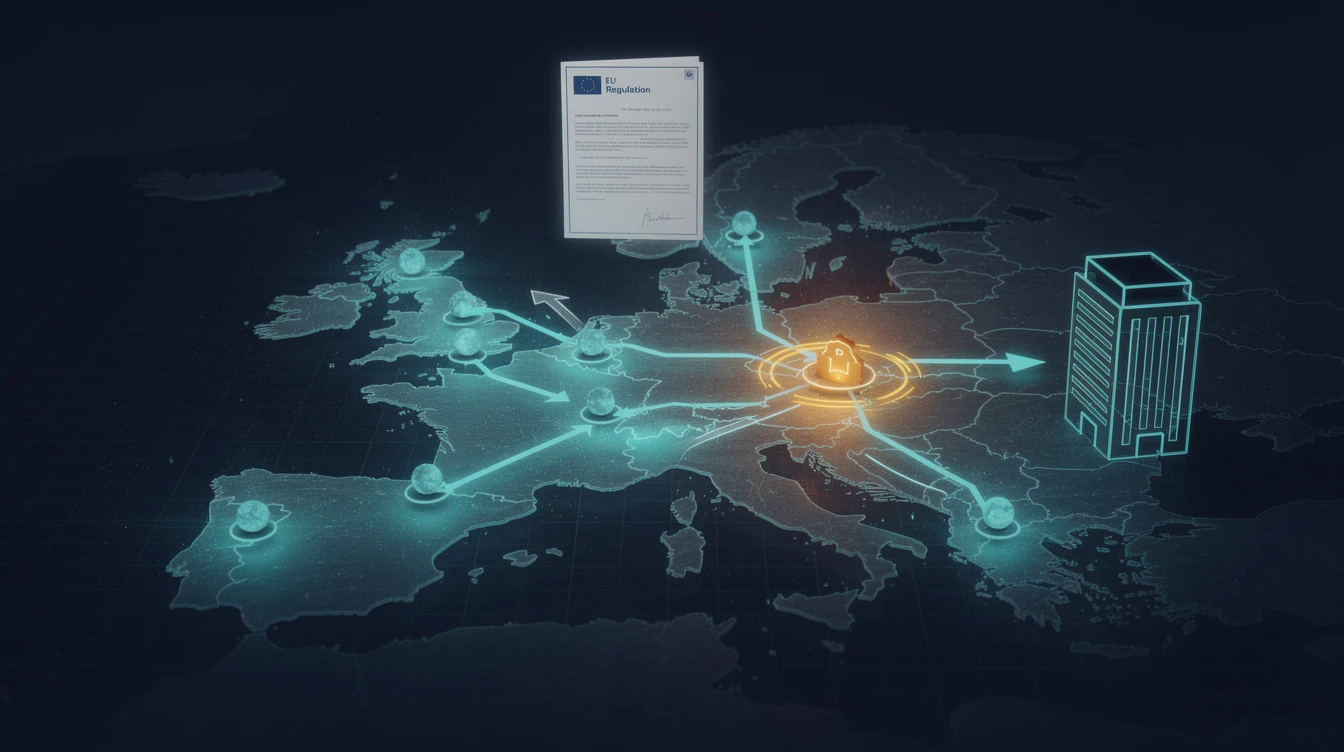
The journey of Irish seafood from a Donegal or Killybegs landing port to supermarket shelf passes through a chain of digital systems — auction platforms, export documentation, cold logistics tracking, and retail buyer compliance portals. Every link in that chain is a potential point of compromise, and the consequences of a breach at any point can halt the entire operation.
This is the fourth article in a five-part series on cybersecurity in Ireland's fishing and fish processing industry. The previous articles covered vessel technology risks, catch data and quota fraud, and ransomware in the processing plant. This article focuses on the commercial supply chain — where the pressure is coming not just from attackers, but from the retail buyers who are increasingly demanding cybersecurity assurances from their suppliers.
The Auction Floor: A Single Point of Failure
Fish auctions at major Irish landing ports — Killybegs, Castletownbere, Dingle, Union Hall — increasingly use digital platforms for price discovery, lot management and settlement. These platforms handle real-time transactions involving multiple buyers and sellers, with prices that move quickly and settlement that follows within days.
A compromise of an auction platform does not affect one business. It affects every fishing business that uses that port. A denial-of-service attack during a busy landing could prevent price discovery entirely, forcing sellers to accept whatever terms they can negotiate bilaterally — typically at a significant discount. Manipulation of lot data or bidding records could distort prices or redirect payments.
The auction platforms themselves are operated by third parties, which means individual fishing businesses have limited control over their security. But they can control how they interact with these platforms — using strong, unique credentials, monitoring their transaction records, and having a fallback plan for what happens when the platform is unavailable.
Retail Buyer Security Questionnaires: The New Cost of Doing Business
This is where cybersecurity stops being an abstract risk and becomes a commercial requirement. Large retailers — Tesco, Lidl, Dunnes, Aldi — are increasingly demanding supply chain security assurances from their food suppliers, including fish processors. These take the form of security questionnaires, compliance audits, and contractual requirements that must be met to retain the contract.
Failure to respond adequately to a buyer security questionnaire can cost you the contract. For a mid-sized fish processor whose business depends on two or three major retail relationships, losing one contract is not an inconvenience — it is an existential threat.
The questions are becoming more specific. Retailers want to know about your patch management, your access controls, your incident response plan, your backup strategy, and your supply chain security practices. They want evidence, not just assurances. This is the same NIS2 supply chain pressure that is affecting businesses across every sector — but in the food industry, the buyer has enormous leverage because switching suppliers is straightforward.
The practical response is to get ahead of these questionnaires. Having a documented security posture — even a basic one — puts you in a stronger position than competitors who cannot answer the questions at all.
Free Resource: Download The Irish SME Cyber Survival Guide — 10 controls based on NCSC Ireland and ENISA guidance. Plain English, no jargon.
Export Documentation: Where Disruption Halts Trade
Irish seafood exports depend on a chain of digital documents — health certificates, customs declarations, export licences, and certificates of origin. These documents are generated, submitted and verified through digital systems operated by the SFPA, the Department of Agriculture, Revenue, and various EU authorities.
A cyber attack that disrupts access to these systems — whether through ransomware on the exporter's own systems, or a compromise of the credentials used to access government portals — can halt exports entirely. Product that is processed, packed and ready to ship sits in cold storage accumulating costs while documentation issues are resolved.
For businesses exporting to the EU single market, the UK (post-Brexit), or further afield, the documentation chain is complex and time-sensitive. A shipment that misses its documentation window may miss its transport slot, and perishable product that misses its transport slot may not survive the delay.
The controls here overlap with the basic email and credential security that every exporting business needs. The credentials used to access SFPA, Revenue and customs systems should be treated as critical business assets — strong passwords, multi-factor authentication, and no sharing between staff members.
Third-Party Cold Logistics: Your Chain Is Only as Strong as Its Weakest Link
The cold chain between processing plant and retail shelf typically involves third-party hauliers and cold storage providers. Each of these third parties has their own IT systems, their own security posture, and their own vulnerabilities. A ransomware attack on your logistics provider can disrupt your deliveries just as effectively as an attack on your own systems.
You cannot outsource the risk by outsourcing the logistics. If your cold logistics provider suffers a breach that causes a temperature excursion in transit, it is your product that is affected, your brand on the packaging, and your relationship with the retailer that is damaged.
The practical step is to include cybersecurity in your vendor assessment process. When selecting or reviewing logistics providers, ask the same questions the retailers are asking you: what is your backup strategy? How do you monitor your cold chain systems? What happens if your dispatch system goes down?
This is the third-party risk management challenge that NIS2 is forcing every Irish business to confront — and the seafood supply chain is a textbook example of why it matters.
Financial Fraud in the Supply Chain
The fishing supply chain involves large, irregular payments — vessel maintenance, fuel, gear, packaging materials, logistics — that make it a prime target for Business Email Compromise (BEC) fraud.
These are the same BEC patterns that cost Donegal businesses tens of thousands of euro every year. Common vectors include fuel supplier impersonation (€20,000–€80,000 per incident), vessel maintenance invoice fraud, and packaging supplier payment redirects. The fishing industry's reliance on large, irregular supplier payments makes it particularly vulnerable. A busy accounts person processing a fuel invoice during a hectic landing period is exactly the target BEC attackers are looking for.
The defence is process, not technology. Verify every change of bank details by phone, using a number you already have on file — not the number on the email. Require dual authorisation for payments above a threshold. Train your accounts team to recognise the red flags.
What Commercial Directors and Export Managers Should Do
The supply chain security challenge is not something you can solve alone, but you can control your part of it.
Document your security posture. Before the next retail buyer questionnaire arrives, have a written summary of your security controls. The NIS2 compliance checklist provides a solid framework.
Assess your critical third parties. Identify the logistics providers, auction platforms and IT suppliers whose failure would directly impact your operations. Ask them about their security practices.
Secure export documentation credentials. Treat access to SFPA, Revenue and customs systems as you would your bank account. Strong passwords, MFA, no credential sharing.
Implement payment verification. For every supplier payment above €5,000, verify bank details by phone before releasing funds.
The final article in this series examines NIS2, food safety law and the compliance obligations that Irish fish processors may not know they have — including why mid-sized processors may already be in scope for NIS2 as food production businesses under Annex I.
Book a free 20-minute strategy call with our vCISO team. We work with food businesses across Donegal and the North West — no jargon, no scare tactics, just clear actionable advice.
Related Reading
- Supply Chain Cybersecurity: Why Your Biggest Client Is About to Audit You
- Third-Party Risk: Your Accountant, Solicitor, and IT Provider
- Test Backups and Disaster Recovery: A Practical Guide for Irish SMEs
[^1]: NCSC Ireland — Advice for Organisations: https://www.ncsc.gov.ie/advice-for-organisations/ [^2]: An Garda Síochána — National Cyber Crime Bureau: https://www.garda.ie/en/crime/cyber-crime/ [^3]: Data Protection Commission Ireland: https://www.dataprotection.ie
Pragmatic Security — Cybersecurity advisory for Irish businesses. Based in Donegal, Ireland. CISA, CISSP, CISM certified advisors.