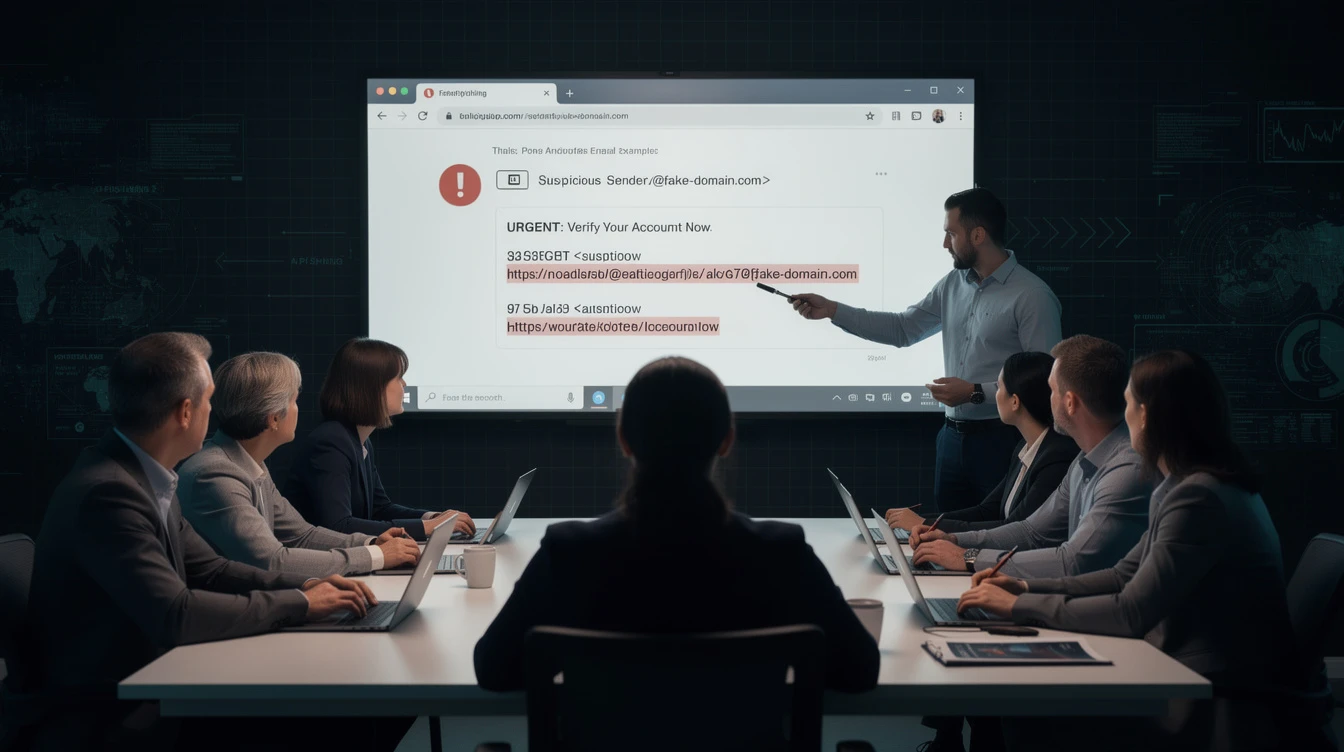
In Donegal and across Ireland, a significant proportion of businesses experienced a cyberattack in the past year (Hiscox Cyber Readiness Report 2024 found 74% of Irish firms reported increased attacks), with human error often cited as a significant contributing factor. Traditional, often monotonous, cybersecurity training sessions frequently fail to capture employee attention, leading to disengagement and a lack of retention of critical security practices. How can Irish SMEs improve this often-overlooked part of their defence? Gamify security training uses game-like elements to make learning cybersecurity principles effective and enjoyable. By adding challenges, rewards, and competition, cybersecurity gamification improves your team's understanding of and adherence to security protocols, turning a chore into something people actually engage with.
Why traditional security training often misses the mark
For many Irish businesses, security awareness training is a box-ticking exercise, driven by compliance requirements rather than a genuine desire to build a strong security culture. Annual presentations, lengthy policy documents, and generic online modules often result in passive learning. Employees may attend, but their minds are elsewhere, leading to a superficial understanding of complex threats like phishing, ransomware, or social engineering.
This lack of engagement is itself a vulnerability. The National Cyber Security Centre (NCSC) Ireland consistently highlights human factors as a primary target for cybercriminals. If your team isn't actively internalising security best practices, your organisation remains exposed, regardless of the technical safeguards in place. The challenge is to deliver information that sticks and translates into behavioural change.
The power of gamification in cybersecurity education
Gamification is the application of game-design elements and game principles in non-game contexts. When applied to cybersecurity training, it transforms passive learning into an active, immersive experience. Instead of simply listening to lectures, employees become participants in a narrative, solving puzzles, competing with colleagues, and earning recognition for their achievements.
This approach taps into intrinsic human motivators such as achievement, competition, collaboration, and immediate feedback. When training feels like a game, it reduces anxiety, increases motivation, and improves information retention. For Irish SMEs, where resources might be stretched, every training minute needs to count. Gamified training turns the investment in security education into tangible improvements in employee vigilance and response.
Benefits of cybersecurity gamification
Employees are more likely to participate actively and stay focused when training is interactive and fun, which increases engagement. Game mechanics such as repetition and problem-solving help embed security concepts more deeply, improving knowledge retention. Practical scenarios and challenges let employees apply their knowledge in a safe environment, developing real skills. It also builds a proactive, collaborative security culture, making security a shared responsibility rather than an IT-only concern. And many gamified platforms offer analytics, so you can track individual and team progress.
Practical gamified approaches for Irish SMEs
Implementing gamification doesn't require a massive budget or complex IT infrastructure. Several accessible and effective strategies can be tailored to the specific needs of Irish SMEs.
Capture the flag (CTF) competitions
CTF events involve teams or individuals solving cybersecurity challenges to "capture flags" (hidden pieces of code or information). These can range from identifying vulnerabilities in simulated systems to decrypting messages or analysing suspicious network traffic. For Irish SMEs, a simplified internal CTF can be designed around common threats, such as identifying phishing emails or safe browsing practices. This hands-on approach builds practical skills and a bit of competitive spirit.
Cybersecurity escape rooms
Imagine your team working together to "escape" a simulated cyberattack scenario by correctly identifying threats, applying security protocols, and making critical decisions under pressure. These can be physical rooms or virtual experiences. An Irish SME could create a virtual escape room based on a data breach scenario, requiring employees to follow GDPR guidelines and incident response procedures to "resolve" the breach. This collaborative problem-solving reinforces teamwork and critical thinking.
Rewards and recognition programmes
Simple reward systems can significantly boost engagement. This could involve points for completing modules, badges for mastering specific topics, or leaderboards showcasing top performers. Consider offering small, tangible rewards for consistent engagement or exceptional performance in security quizzes. Public recognition within the company for employees who report suspicious activities or demonstrate strong security awareness can also be highly effective in promoting a positive security culture.
Interactive learning modules and quizzes
Move beyond static presentations with interactive modules that incorporate mini-games, branching narratives, and immediate feedback. Platforms that offer short, engaging quizzes after each section can help reinforce learning. For instance, a module on data protection could include a drag-and-drop exercise categorising data types under GDPR, or a scenario-based quiz on reporting a data breach to the Data Protection Commission (DPC) Ireland.
Free Resource: Download The Irish SME Cyber Survival Guide, 10 controls based on NCSC Ireland & ENISA guidance. Plain English, no jargon.
Implementing gamification: key considerations
When introducing gamified security training, Irish SMEs should consider a few key factors to ensure success.
Start small and scale up
Begin with a pilot programme involving a smaller team or focusing on a specific security topic. Gather feedback, refine your approach, and then gradually expand. This iterative process allows you to tailor the gamified experience to your unique organisational culture and technical capabilities.
Align with business objectives and regulations
Ensure your gamified training directly addresses your organisation's specific cyber risks and compliance obligations. For example, if your SME handles sensitive customer data, scenarios should heavily feature data protection and GDPR compliance. The training should complement your overall risk management strategy and help meet requirements from bodies like the CCPC regarding consumer data protection.
Measure and adapt
Track key metrics such as completion rates, quiz scores, time spent on modules, and, most importantly, changes in employee behaviour (e.g., fewer clicks on phishing simulations). Use this data to identify areas for improvement and adapt your gamification strategies over time. Regular feedback loops keep the programme improving.
Build a positive learning environment
While competition can be motivating, ensure the primary focus remains on learning and improvement ahead of winning. Emphasise collaboration and support, making it clear that the goal is to collectively strengthen the company's security posture. Celebrate successes and provide constructive feedback for areas needing development.
What this means for your business
For Irish SMEs, investing in engaging, effective security training is no longer optional. The financial and reputational costs of a cyberattack can be devastating, particularly for smaller organisations. Gamify security training turns a compliance burden into a tool for reducing risk and strengthening culture. Your employees become your strongest defence, actively protecting your business assets and customer data.
A well-trained, cyber-aware workforce also demonstrates due diligence, which can help in the event of a breach and may reduce penalties from regulatory bodies like the Data Protection Commission or the Central Bank of Ireland, depending on your sector. It also signals to clients and partners that your business takes security seriously.
Ready to strengthen your security posture?
Pragmatic Security works with Irish SMEs to build practical, proportionate cybersecurity programmes that protect your business, satisfy regulators, and give you confidence. Whether you need NIS2 compliance support, a vCISO on retainer, or a one-off security assessment, we're here to help.
Book a free 20-minute strategy call today, no jargon, no hard sell, just practical advice from an experienced Irish cybersecurity professional.
Or contact us at [email protected] or call +353 (0)87 0515 776.
How compliant is your business? Check your compliance readiness with our free Compliance Checker.
Related reading
- How to Run a Phishing Simulation Without Destroying Your Team's Trust.
- How to Write a Cybersecurity Policy Your Staff Will Actually Read (Template Included)
- How to Spot a Phishing Email: A Plain-English Guide for Donegal Business Owners.
[^1]: NCSC Ireland, Advice for Organisations: https://www.ncsc.gov.ie/advice-for-organisations/ [^2]: An Garda Síochána, Cyber Crime: https://www.garda.ie/en/crime/cyber-crime/ [^3]: Data Protection Commission Ireland: https://www.dataprotection.ie
Pragmatic Security, Cybersecurity advisory for Irish businesses. Based in Donegal, Ireland. CISA, CISSP, CISM certified advisors.