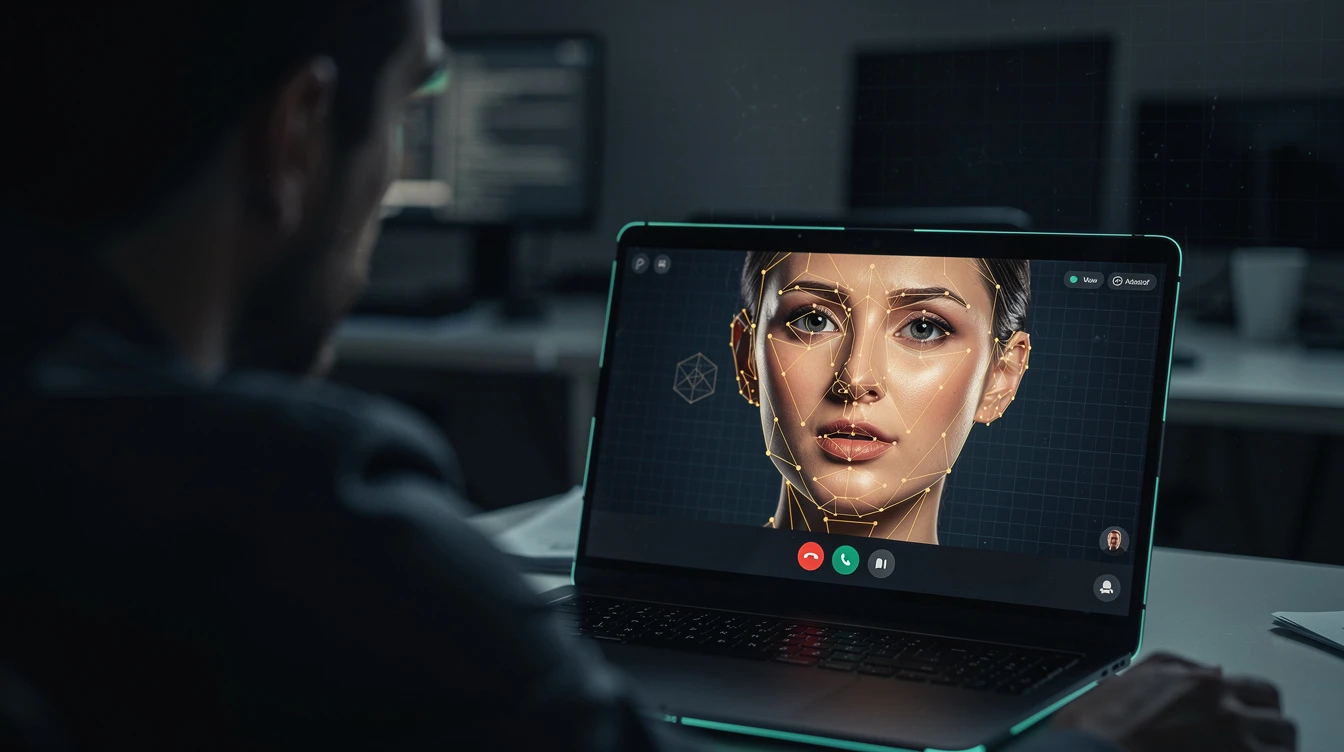
Affecting businesses across Donegal, Sligo, and Ireland: AI voice fraud is a growing threat to Irish SMEs.
Imagine receiving an urgent call from your CEO, their voice unmistakably familiar, requesting an immediate, confidential transfer of funds. The request seems legitimate, the tone urgent, and the voice identical. You act quickly, only to discover later that the voice belonged to a sophisticated AI-generated deepfake, not your CEO. This is a rapidly escalating reality, and it poses significant deepfake business fraud risks to Irish SMEs.
The rise of deepfake business fraud
Deepfake technology, once a niche concern, has matured rapidly and is now accessible to cybercriminals. These AI tools can convincingly mimic a person's voice, facial expressions, and mannerisms from minimal source material. For businesses, this creates a new vector for fraud that goes beyond traditional phishing into highly personalised and believable attacks.
Criminals use deepfakes to bypass security measures that rely on visual or auditory verification. Hearing a familiar voice or seeing a trusted face makes these scams very difficult to detect in the moment. This form of social engineering exploits trust, a cornerstone of business operations, and turns it into a vulnerability.
How deepfakes fuel financial crime
Deepfake technology is being used in several ways to commit financial crime against businesses:
- CEO voice clone attacks: Fraudsters use AI to mimic a CEO's voice, then call finance departments or senior executives with urgent instructions for wire transfers or changes to vendor payment details. The urgency and authenticity of the voice often override suspicion.
- Invoice redirection scams: Deepfake voices or video calls can impersonate a legitimate vendor or a senior manager and instruct accounts payable to update bank details for future payments. This subtle change can divert substantial funds over time.
- Impersonation for data theft: Deepfakes can also impersonate employees or executives to gain access to sensitive company data or intellectual property. A deepfake video call could trick an IT helpdesk into resetting passwords or granting access to systems.
Real-world deepfake incidents
Deepfake business fraud has already led to significant financial losses globally. These incidents show Irish businesses how sophisticated and effective the attack methods have become.
In one notable case, a UK energy firm CEO was reportedly tricked into transferring €220,000 to a Hungarian supplier after receiving a deepfake voice call from what he believed was his German parent company's chief executive. The fraudster mimicked the German executive's voice, accent, and even intonation, creating a highly convincing illusion.
Another incident involved a bank manager in the UAE who was defrauded of $35 million after deepfake voice technology was used to impersonate a company director. The fraudsters used AI to mimic the director's voice during a series of calls, convincing the manager to authorise multiple transfers.
These cases show why verification processes need to go beyond simple voice recognition. The attacks are easy to execute and the potential losses are large, which makes deepfakes a serious concern for security professionals and business leaders alike.
Protecting Irish SMEs from deepfake threats
Irish SMEs need to understand and reduce the risks of deepfake business fraud. The National Cyber Security Centre (NCSC Ireland) consistently advises businesses to adopt a proactive stance against emerging threats. The Competition and Consumer Protection Commission (CCPC) also highlights the importance of vigilance against all forms of fraud.
Verification protocols that hold up
One of the most effective defences against deepfake attacks is to establish and strictly enforce multi-factor verification protocols for all financial transactions and sensitive data access. This means:
- Out-of-band verification: Always verify unusual requests, especially those involving financial transfers or changes to payment details, through a secondary, independent channel. This could be a pre-agreed phone number, a separate email address, or an in-person conversation. Do not rely on the contact details provided in the suspicious communication.
- Dual authorisation: Require at least two senior individuals to authorise significant financial transactions. This adds an extra layer of human scrutiny.
- Challenge questions: Use pre-arranged challenge questions or codes that deepfake technology would struggle to replicate. These should be questions not easily found in public information.
Employee awareness and training
Your employees are your first line of defence. Regular, targeted security awareness training should focus specifically on the dangers of deepfakes and CEO voice clone attack tactics. Training should cover:
- Recognising red flags: Teach staff the common indicators of deepfake attempts, such as unusual urgency, requests for secrecy, or slight inconsistencies in voice or video quality.
- Reporting procedures: Make sure employees know exactly how to report suspicious communications without fear of reprisal. A clear reporting channel can prevent a potential breach from escalating.
- Simulated attacks: Consider internal deepfake simulation exercises to test employee vigilance and response protocols in a controlled environment.
Technology and expertise
Deepfake detection technology is still evolving, and some tools can help identify anomalies in voice and video. Human vigilance remains critical. Working with cybersecurity experts, such as a vCISO, can give your SME access to up-to-date threat intelligence and tailored defence strategies.
Free Resource: Download The Irish SME Cyber Survival Guide: 10 controls based on NCSC Ireland & ENISA guidance. Plain English, no jargon.
What this means for your business
Deepfake technology makes the threats facing Irish SMEs more complex and more sophisticated. Traditional security measures alone are no longer sufficient. Businesses need to adapt: put stronger verification processes in place, build a culture of cybersecurity awareness, and stay informed about emerging threats.
Ignoring the deepfake threat can lead to severe financial losses, reputational damage, and a loss of trust among clients and partners. Proactive investment in cybersecurity, including expert guidance, has become a necessity.
Ready to strengthen your security posture?
Pragmatic Security works with Irish SMEs to build practical, proportionate cybersecurity programmes that protect your business, satisfy regulators, and give you confidence. Whether you need NIS2 compliance support, a vCISO on retainer, or a one-off security assessment, we're here to help.
Book a free 20-minute strategy call today: no jargon, no hard sell, just practical advice from an experienced Irish cybersecurity professional.
Or contact us at [email protected] or call +353 (0)87 0515 776.
Related reading
- A Donegal Business Lost €47,000 in 48 Hours: Here Is Exactly What Happened
- Email Security Beyond the Spam Filter: What Irish SMEs Actually Need
- Detecting and Handling Insider Threats Without Building a Culture of Mistrust
[^1]: NCSC Ireland: Advice for Organisations [^2]: An Garda Síochána: Cyber Crime [^3]: Data Protection Commission Ireland
Pragmatic Security: cybersecurity advisory for Irish businesses. Based in Donegal, Ireland. CISA, CISSP, CISM certified advisors.