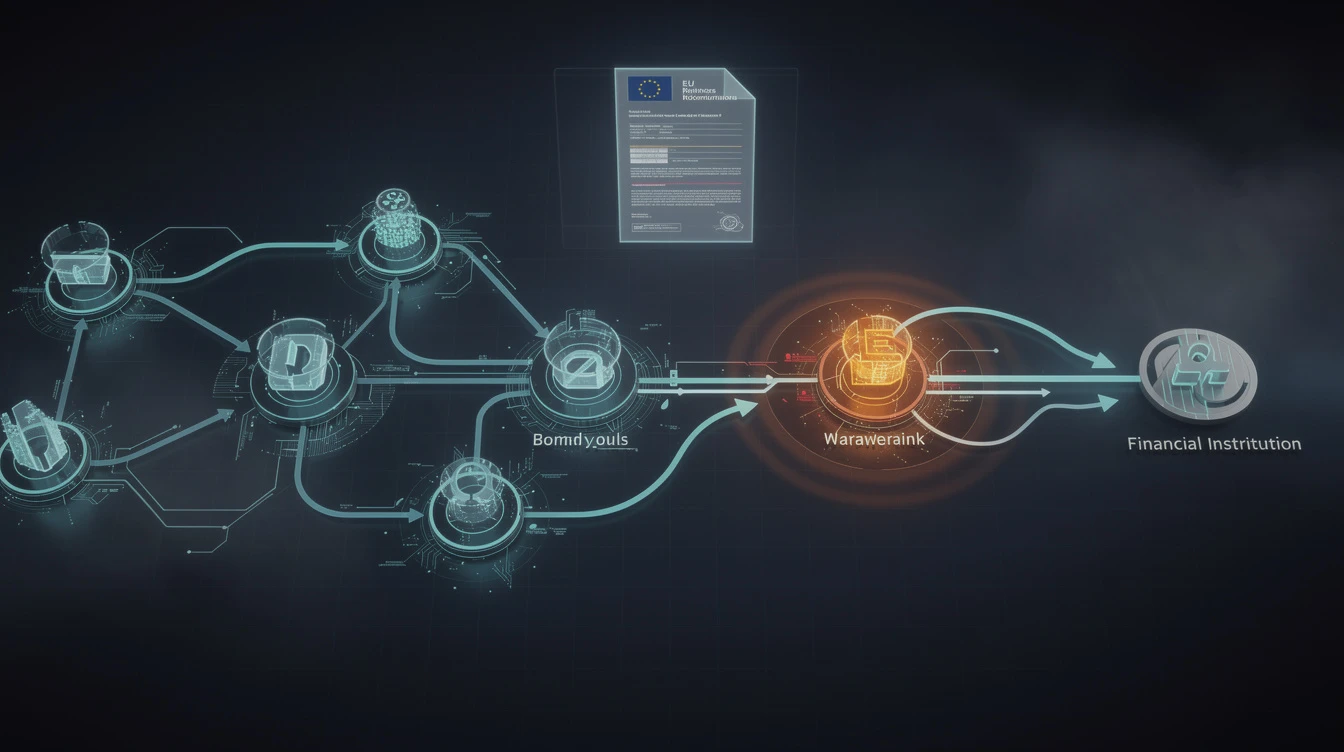
A Donegal IT services firm recently discovered that their biggest client, a healthcare provider in Letterkenny, was about to send them a detailed cybersecurity questionnaire. Under NIS2, the client had no choice.
The NIS2 Directive marks a significant shift in cybersecurity regulations, extending its reach beyond an organization's direct operations to encompass the entire supply chain. For Irish Small and Medium-sized Enterprises (SMEs), this means a heightened focus on the security posture of their suppliers, vendors, and partners. Understanding and implementing strong supply chain security measures under NIS2 is about more than compliance, it protects your business from cascading cyber risks and supports the resilience of the broader digital ecosystem.
The growing threat of supply chain attacks
Supply chain attacks have become a preferred tactic for cybercriminals. Instead of directly targeting a well-defended organization, attackers exploit vulnerabilities in less secure third-party suppliers to gain access to their ultimate target. Recent high-profile incidents have demonstrated how a single weak link in the supply chain can lead to widespread disruption, data breaches, and significant financial and reputational damage across multiple entities.
NIS2 recognizes this escalating threat and explicitly mandates that entities within its scope implement measures to address cybersecurity risks in their supply chain and relationships with direct suppliers and service providers [1]. This means Irish SMEs must now actively assess and manage the security of their external dependencies.
Key NIS2 requirements for supply chain security
Under NIS2, entities are required to implement risk management measures that include aspects of supply chain security. This involves a proactive approach to understanding and mitigating risks associated with third-party relationships. Specifically, NIS2 requires a thorough risk assessment of the cybersecurity risks posed by direct suppliers and service providers. Contracts with suppliers should include provisions that mandate specific cybersecurity measures, incident reporting obligations, and audit rights. Businesses should also apply due diligence processes to evaluate the security practices of potential and existing suppliers, and ensure that the security of products and services, including their acquisition, development, and maintenance, is adequately addressed.
A step-by-step approach to NIS2 supply chain security for Irish SMEs
For Irish SMEs, navigating these requirements can be challenging. Here's a practical, step-by-step approach:
Step 1: identify and map your supply chain
Begin by comprehensively identifying all your direct suppliers and service providers that have access to your systems, data, or are critical to your operations. This includes IT service providers, cloud providers, software vendors, managed security service providers, and even non-IT suppliers whose failure could impact your security.
Step 2: assess supplier cybersecurity risks
For each identified supplier, conduct a risk assessment. Evaluate what data they access or process on your behalf, what level of system access they hold, what security controls they have in place (request evidence of policies, certifications such as ISO 27001, and incident response capability), where their operations are located, and how they manage their own sub-suppliers.
Step 3: implement contractual security requirements
Ensure your contracts with suppliers include strong cybersecurity clauses. These should mandate adherence to specific minimum security standards and best practices, require immediate notification of any security incidents or breaches that could impact your business along with clear reporting timelines, reserve your right to audit their security practices or request third-party security assessments, clearly define responsibilities for data protection, especially for personal data (GDPR), and include a right to terminate the contract in case of severe security breaches or non-compliance.
Step 4: continuous monitoring and due diligence
Supply chain security is not a one-time exercise. It requires ongoing vigilance: periodically reassessing your suppliers' security posture, especially for critical vendors, using standardized security questionnaires (such as SIG Lite or CAIQ) to gather information from suppliers, considering third-party security rating services to continuously monitor the external security posture of your key suppliers, and maintaining open lines of communication with your suppliers about cybersecurity risks and expectations.
Step 5: integrate supply chain risk into your overall risk management
Treat supply chain risks as an integral part of your overall cybersecurity risk management framework. Add identified supply chain risks to your central risk register, ensure your incident response plan accounts for incidents originating from your supply chain, and brief your management body on supply chain cybersecurity risks regularly.
Free Resource: Download The Irish SME Cyber Survival Guide, 10 controls based on NCSC Ireland & ENISA guidance. Plain English, no jargon.
The role of a vCISO in supply chain security
A Virtual CISO (vCISO) can be an invaluable asset for Irish SMEs in managing NIS2 supply chain security. They can help establish a comprehensive vendor risk management framework tailored to your business, perform due diligence and risk assessments on your critical suppliers, assist in drafting and reviewing contractual security clauses with suppliers, and offer ongoing guidance and oversight to keep your supply chain security programme effective and compliant.
How compliant is your business? Check your compliance readiness with our free Compliance Checker.
Conclusion
Supply chain security under NIS2 is a critical area that Irish SMEs can no longer afford to overlook. By taking a structured, proactive approach to identifying, assessing, and mitigating risks associated with your suppliers and partners, you can significantly enhance your overall cybersecurity resilience. This ensures compliance with NIS2 and protects your business from the impact of cascading cyberattacks, safeguarding your operations, data, and reputation in an interconnected digital world.
References:
[1] European Union. (2022). Directive (EU) 2022/2555 on measures for a high common level of cybersecurity across the Union (NIS2 Directive). Official Journal of the European Union. https://eur-lex.europa.eu/legal-content/EN/TXT/?uri=CELEX%3A32022L2555 [2] National Cyber Security Centre Ireland. (n.d.). NIS2 Directive. https://www.ncsc.gov.ie/advice-for-organisations/nis2-directive/
Take the next step
If your NIS2 compliance obligations is something you're thinking about, the best starting point is a structured conversation.
Book a free 20-minute call with our vCISO team. We work with Irish SMEs across every sector, no jargon, no scare tactics, just clear advice on what to do next.
Book Your Free 20-Minute Call →
Related reading
- NIS2 Third-Party Risk: Managing Your Supply Chain Obligations
- NIS2 Supply Chain Security: Hard Questions Your Client Will Ask
- The 12-Month Cyber Governance Roadmap for a Donegal SME: From Zero to NIS2-Ready
[^1]: NCSC Ireland, Advice for Organisations: https://www.ncsc.gov.ie/advice-for-organisations/ [^2]: An Garda Síochána, Cyber Crime: https://www.garda.ie/en/crime/cyber-crime/ [^3]: Data Protection Commission Ireland: https://www.dataprotection.ie
Pragmatic Security, Cybersecurity advisory for Irish businesses. Based in Donegal, Ireland. CISA, CISSP, CISM certified advisors.