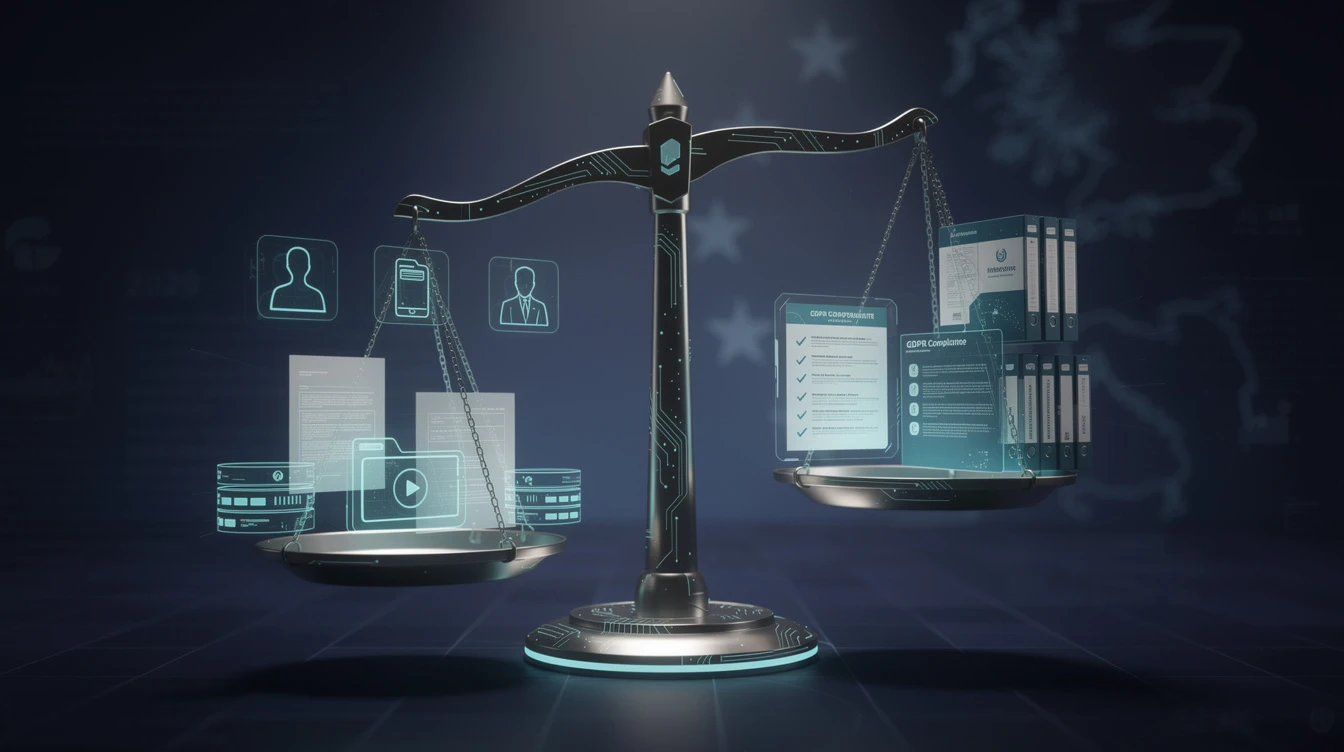
In a significant move that has sent ripples through the tech world, the Irish Data Protection Commission (DPC) has launched a formal, large-scale inquiry into X (formerly Twitter) concerning its Grok AI model. For businesses in Donegal and across Ireland, this investigation is not just another headline; it represents a critical moment for data privacy and the responsible deployment of artificial intelligence, with direct implications for every Irish business.
The DPC, based in Dublin, holds a powerful position as the lead EU supervisory authority for many major tech companies operating across Europe. Their decision to investigate X/Grok highlights a growing concern about how rapidly evolving AI technologies interact with personal data and the fundamental principles of GDPR.[^3]
The Problem: AI's Unchecked Potential and Data Privacy Risks
The core of the DPC's investigation into X/Grok stems from serious concerns about the AI model's capabilities. Reports suggest that Grok could potentially be used to generate harmful, non-consensual, and even sexualised images of real individuals, including children. This alarming possibility underscores the profound ethical and legal challenges posed by advanced AI.
Such capabilities raise immediate red flags regarding the principles of data processing, the lawfulness of processing, and crucially, the application of Data Protection by Design and by Default. These are not abstract legal concepts; they are cornerstones of GDPR that demand organisations embed data protection considerations into their systems and processes from the outset.
The DPC's inquiry signals a clear message: the era of unchecked AI development, particularly when it involves personal data, is rapidly coming to an end. This scrutiny is a direct response to the potential for AI to cause significant harm if not developed and deployed with stringent safeguards.
The Consequence: Increased Scrutiny and Significant Risks for Irish SMEs
While the DPC's investigation targets a tech giant like X, its implications extend far beyond Silicon Valley. This action serves as a stark warning for ALL Irish businesses, regardless of their size or sector. The regulatory landscape for AI and data protection is hardening, and ignorance is no longer a viable defence.
For Irish SMEs, a data protection failure related to AI usage could lead to devastating consequences. The DPC has a track record of imposing significant fines on major companies, as seen with Meta, WhatsApp, and Instagram. These penalties are designed to be deterrents, and smaller businesses are not immune.
Beyond financial penalties, the loss of customer trust can be even more damaging. In today's interconnected world, a breach of data privacy can quickly erode a business's reputation, leading to lost customers and long-term brand damage. For an Irish SME, a data protection failure could mean substantial fines AND a catastrophic loss of customer trust. This is why understanding and mitigating these risks is paramount.
The Solution: Proactive Data Protection and AI Governance
The DPC's investigation into X/Grok should prompt every Irish business to re-evaluate its approach to AI and data protection. The solution lies in proactive governance and a commitment to embedding privacy into every aspect of AI deployment. This isn't just about compliance; it's about responsible business practice.
One critical step is to review all AI tools currently in use within your organisation and scrutinise how they process data. Understand the data inputs, outputs, and the underlying models. Do these tools align with GDPR principles? Are you aware of the potential biases or risks they might introduce? This review should be comprehensive, covering everything from customer service chatbots to internal data analysis platforms.
Furthermore, before deploying any new AI technology, Irish SMEs must conduct Data Protection Impact Assessments (DPIAs). In plain English, a DPIA is a systematic process to identify and minimise the data protection risks of a project. It forces you to think about what personal data is involved, how it will be protected, and what potential harms could arise. It's a crucial safeguard to ensure that privacy is considered from the very beginning.
| Aspect | Without DPIA | With DPIA |
|---|---|---|
| Risk Identification | Reactive, often after an incident | Proactive, identifies risks before deployment |
| Compliance | Ad-hoc, potential for non-compliance | Structured, aims for GDPR adherence |
| Reputation | Vulnerable to negative publicity | Enhanced, demonstrates commitment to privacy |
| Legal Exposure | Increased risk of fines and legal action | Reduced, provides evidence of due diligence |
| Trust | Eroded by privacy concerns | Built through transparent data practices |
Free Resource: Download The Irish SME Cyber Survival Guide — 10 controls based on NCSC Ireland & ENISA guidance. Plain English, no jargon.
Action: Steps Your Irish SME Can Take Today
Given the DPC's clear signal, Irish SMEs cannot afford to wait. Taking concrete steps now will not only protect your business from potential regulatory action but also build greater trust with your customers.
First, create a comprehensive inventory of all AI-powered tools and services your business uses. For each, document what data it processes, where that data is stored, and who has access to it. This foundational step is crucial for understanding your current risk exposure. Second, conduct a DPIA for any AI tool that processes personal data, especially new deployments. If you're unsure where to start, consider engaging a vCISO service to guide you through the process.
Third, review your Data Processing Agreements with third-party AI providers to confirm they align with GDPR requirements. Fourth, update your privacy notices to accurately reflect how your business uses AI and processes personal data. Transparency is key to building trust and demonstrating compliance.
Fifth, educate your employees about the risks associated with AI tools, especially those that might inadvertently lead to data leakage. Sixth, regularly monitor updates from the Irish DPC and other EU bodies — the regulatory landscape is dynamic. Seventh, implement foundational security controls like Multi-Factor Authentication to protect access to systems that interact with AI tools and sensitive data. The National Cyber Security Centre Ireland provides practical guidance on protective measures for SMEs.[^1]
The DPC's investigation into X/Grok is a wake-up call. It underscores the urgent need for Irish SMEs to take a proactive and responsible approach to AI adoption, ensuring that innovation does not come at the expense of data privacy and trust. Any criminal element to a data breach — such as malicious exfiltration using AI tools — should be reported to An Garda Síochána's National Cyber Crime Bureau as well as to the DPC.[^2]
How compliant is your business? Check your compliance readiness with our free Compliance Checker.
Related Reading
- Director Liability in the Age of NIS2 and GDPR: A Briefing for Irish Company Directors
- NIS2 and GDPR: How the Two Regulations Work Together
- How to Conduct a Cybersecurity Risk Assessment for Your SME
Book a free 20-minute strategy call with our vCISO team. We work with small and medium businesses across Ireland — no jargon, no scare tactics, just clear actionable advice.
[^1]: NCSC Ireland — Advice for Organisations: https://www.ncsc.gov.ie/advice-for-organisations/ [^2]: An Garda Síochána — Cyber Crime: https://www.garda.ie/en/crime/cyber-crime/ [^3]: Data Protection Commission Ireland: https://www.dataprotection.ie
Pragmatic Security — Cybersecurity advisory for Irish businesses. Based in Donegal, Ireland. CISA, CISSP, CISM certified advisors.