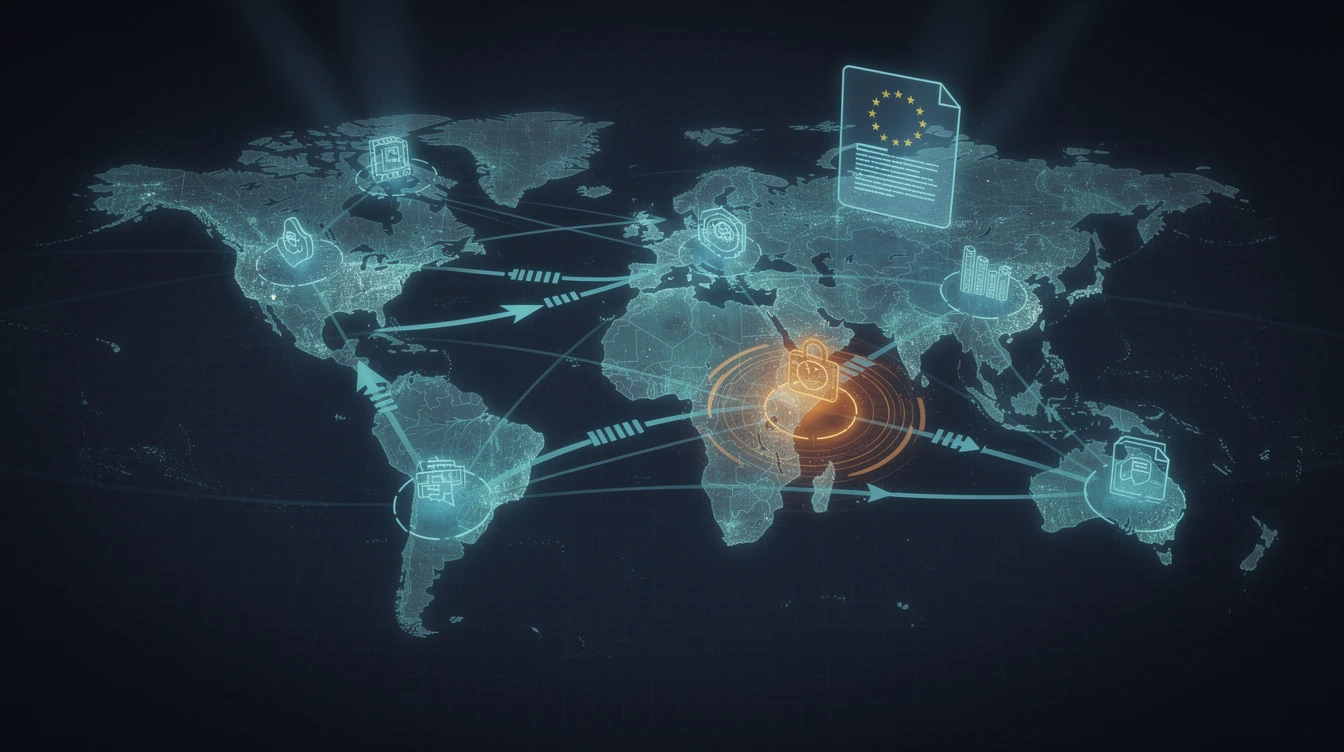
Could a single fraudulent email cost your Donegal construction firm hundreds of thousands of euro? It’s not a hypothetical question. Invoice redirection fraud, where criminals trick businesses into paying legitimate invoices to a criminal’s bank account, is a growing threat across Ireland. The construction and engineering sectors, with their complex payment chains and high-value transactions, are particularly vulnerable. For more insights into broader cyber threats, visit our blog. Protecting your projects and your payments requires more than just good building practices; it demands robust cybersecurity.
The Digital Foundations of Modern Construction
Modern construction and engineering projects, from the smallest extension in Letterkenny to major infrastructure works across Donegal, rely heavily on digital systems. Project management platforms, Building Information Modelling (BIM) software, Computer-Aided Design (CAD) files, and cloud-based collaboration tools are now the norm. This digital transformation brings efficiency but also introduces new avenues for cybercriminals to exploit.
These systems hold a treasure trove of sensitive information: proprietary designs, financial details, subcontractor agreements, and project timelines. A breach of these systems can lead to intellectual property theft, competitive disadvantage, and significant financial losses. For Donegal firms, whose reputations are often built on trust and local relationships, a cyber incident can be devastating.
The Rising Tide of Invoice Fraud and Data Theft
Invoice redirection fraud remains a persistent and costly problem for Irish businesses. An Garda Síochána consistently warns businesses about this scam, where criminals impersonate suppliers or contractors and send altered payment instructions. Imagine a payment intended for a legitimate subcontractor on a Donegal County Council project being diverted to an offshore account. The financial impact can be immediate and severe, often only discovered when the real supplier chases their unpaid invoice.
Beyond direct financial theft, the construction sector faces unique data risks. CAD and BIM files, which contain detailed designs and specifications, are highly valuable intellectual property. Their theft could compromise future tenders, expose design flaws, or be sold to competitors. Project management platforms, if breached, can reveal critical project timelines, resource allocation, and communication, enabling further targeted attacks or sabotage. The interconnected nature of the supply chain means a weakness in one subcontractor's security can expose the entire project.
Safeguarding Your Payments: Verification is Key
Protecting your firm from invoice fraud starts with rigorous payment verification processes. Simply trusting an email is no longer enough. Every change in payment details, regardless of how urgent it appears, must be independently verified through a known, trusted channel – ideally a phone call to a pre-arranged contact number, not one provided in the suspicious email. This is your first line of defence against sophisticated social engineering attacks.
Consider implementing a 'two-person rule' for all significant financial transactions. This means that two separate individuals must authorise and verify payment details before funds are released. This simple procedural control acts as a crucial check and balance, making it far more difficult for a single point of failure to lead to a major financial loss. For many Donegal businesses, this might feel like an extra step, but it's a necessary one in today's threat landscape.
| Verification Method | Security Level | Ease of Implementation | Notes |
|---|---|---|---|
| Phone Call (pre-arranged number) | High | Medium | Most effective. Requires pre-existing trusted contact. |
| Email Reply (to original sender) | Low | High | Easily compromised if email account is breached. |
| Text Message | Medium | Medium | Better than email, but still vulnerable to SIM-swapping. |
| In-person Confirmation | Very High | Low | Impractical for most transactions, but ideal for new suppliers. |
Not sure where your business stands on cyber risk? Download the Irish SME Cyber Survival Guide — a free, plain-English guide to the 10 controls every Irish business needs. No jargon, no sales pitch.
Protecting Your Project Data: From CAD to Cloud
Your project data, from initial sketches to final renders, is the lifeblood of your engineering and construction work. Protecting CAD and BIM files requires a multi-layered approach. Firstly, ensure all design software is kept up-to-date with the latest security patches. Outdated software is a common entry point for attackers. Secondly, implement strong access controls, ensuring only authorised personnel can view, edit, or download sensitive project files. This means regularly reviewing who has access to what, especially when staff roles change or leave the company.
For cloud-based project management platforms, the responsibility is shared. While the platform provider secures the infrastructure, you are responsible for securing your account. This includes enforcing strong, unique passwords and, crucially, enabling multi-factor authentication (MFA) for all users. MFA adds an extra layer of security by requiring a second form of verification, like a code from your phone, making it significantly harder for criminals to gain unauthorised access even if they steal a password. NCSC Ireland strongly advocates for MFA as one of the most effective security controls for businesses of all sizes [^1]. You can learn more about specific compliance requirements in our NIS2 Scope article.
Securing the Supply Chain: A Collective Responsibility
The construction sector's reliance on a vast network of subcontractors, suppliers, and partners creates an extended digital supply chain. A breach in a smaller, less secure subcontractor can provide a backdoor into larger projects. Imagine a small Donegal-based electrical contractor's systems being compromised, allowing criminals to inject malware into project documents shared with a main contractor. This is not just a theoretical risk; supply chain attacks are increasingly common and sophisticated.
To mitigate this, larger firms, such as those working on significant public procurement for Donegal County Council, should consider implementing basic cybersecurity requirements for their supply chain partners. This doesn't need to be overly complex; it could involve mandating MFA, requiring regular security awareness training, or ensuring basic endpoint protection. A chain is only as strong as its weakest link, and in cybersecurity, that often applies to the smallest partner in your ecosystem. Open communication and collaboration on security best practices can elevate the overall resilience of the entire project.
Building a Resilient Future for Donegal Firms
The digital landscape presents both immense opportunities and significant risks for Donegal's construction and engineering firms. From protecting multi-million euro payments to safeguarding innovative designs, cybersecurity is no longer an optional extra; it's a fundamental component of project success and business continuity. By focusing on robust payment verification, comprehensive data protection, and a secure supply chain, you can build a stronger, more resilient future. For a comprehensive set of definitions on cybersecurity terms, refer to our glossary.
Related Reading
- The Cybersecurity Conversation Every Donegal Business Owner Should Have With Their IT Provider.
- Cybersecurity for Donegal Transport and Logistics Companies.
- Cybersecurity for Donegal Credit Unions: Protecting Member Data and Financial Integrity.
Ready to find out exactly where your business stands? Book a free 20-minute strategy call with our vCISO team at www.pragmaticsecurity.ie/book-a-call. No sales pitch. No jargon. Just clarity on your cyber risk — and a clear plan to address it.
[^1]: NCSC Ireland — Guidance. https://www.ncsc.gov.ie/advice-for-organisations/ [^2]: An Garda Síochána — Cyber Crime. https://www.garda.ie/en/crime/cyber-crime/ [^3]: Data Protection Commission — Organisations. https://www.dataprotection.ie
Pragmatic Security — Cybersecurity advisory for Irish businesses. Based in Donegal, Ireland. CISA, CISSP, CISM certified advisors.